

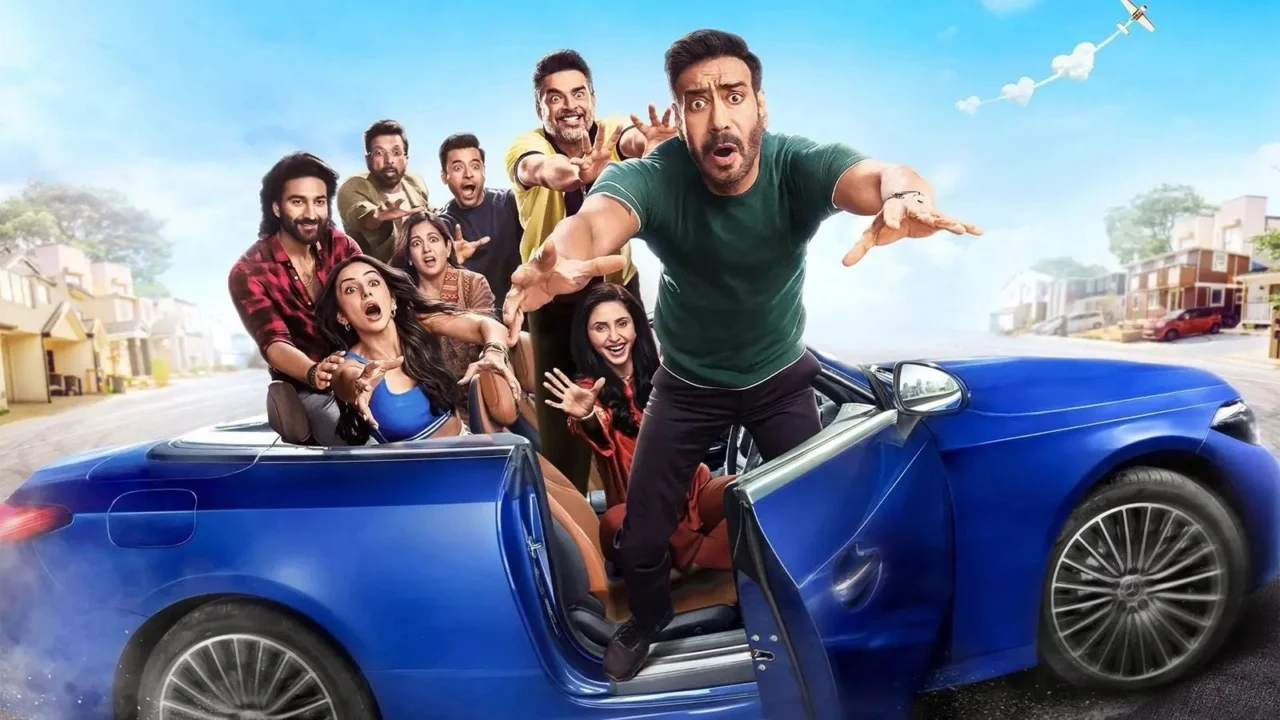
Six years after winning hearts with an unconventional love story, Ajay Devgn and Rakul Preet Singh return in a sequel that explores what happens when romance meets family expectations. This time, R. Madhavan joins the cast, playing Ayesha’s father in a role that shifts the focus from winning over one family to convincing another.
Under Anshul Sharma’s direction, with a screenplay by Luv Ranjan and Tarun Jain, the November 14, 2025 release attempts to recapture the original’s charm. But does it succeed in creating its own identity while honoring what came before?
The Central Conflict
After establishing their relationship in London, Ashish and Ayesha reach a new milestone. When Ayesha returns to Chandigarh for a family gathering, she brings her boyfriend along to meet her parents. The complication? Her father is practically the same age as the man she loves.
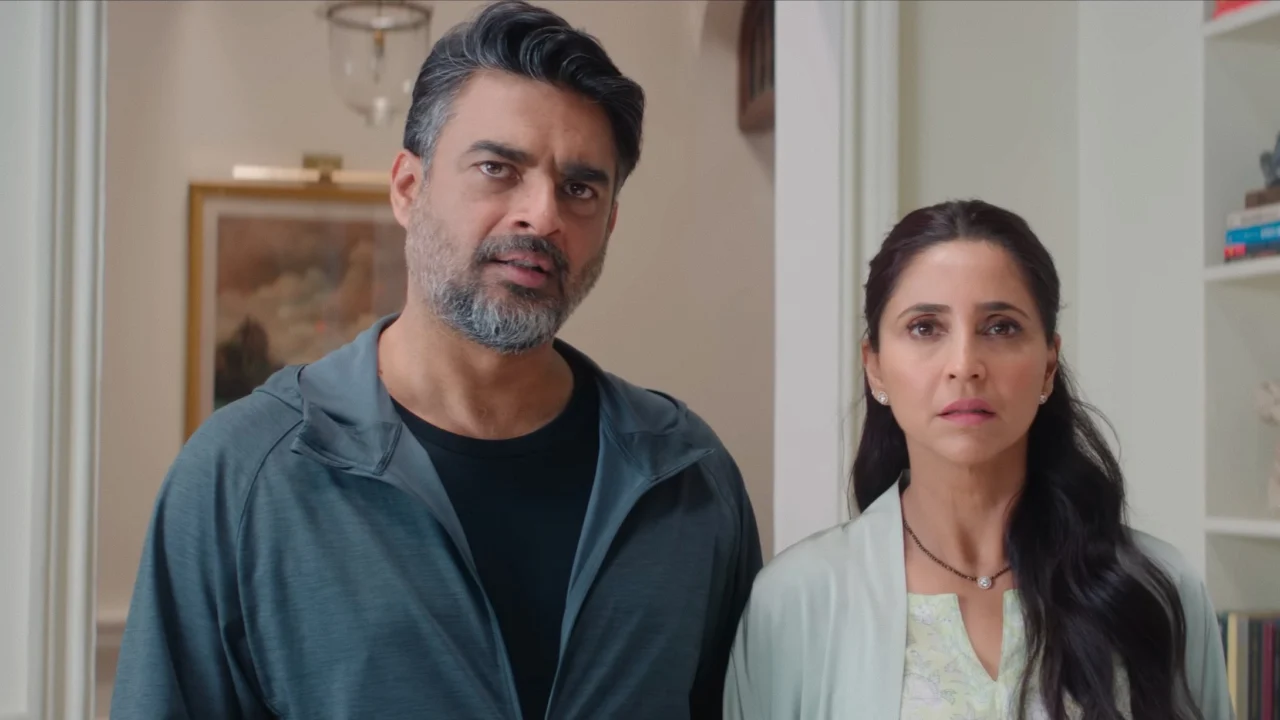
What starts as a simple introduction transforms into a complex dance of egos and expectations. Rakesh struggles to accept his daughter dating someone who could be his peer. Meanwhile, Ayesha’s family introduces a younger man as a potential match, forcing Ashish to prove his worth all over again.
Building the Narrative
The story wastes no time establishing stakes. Within the opening sequences, we understand the challenge ahead. Ayesha’s parents initially project modern thinking, but meeting Ashish shatters their liberal facade. The age difference becomes an elephant nobody can ignore.
I noticed how the screenplay layers complications smartly. Just when one conflict seems resolved, another emerges. The writing maintains tension through misunderstandings, cultural clashes, and generational differences. By intermission, the situation reaches a boiling point that changes everything.
Performance Highlights
Madhavan transforms a potentially one-note character into something memorable. His Rakesh moves beyond stereotypical father roles, showing layers of protectiveness mixed with self-doubt. The actor brings nuance to scenes that could have played as simple comedy. His confrontations with Ajay crackle with energy, while quieter moments with Rakul reveal genuine paternal concern.
Ajay approaches Ashish with maturity and restraint. Rather than dominating scenes, he allows other actors space to shine. His character’s patience becomes a strength, showing how age brings wisdom rather than just experience. The meta-references to his filmography land perfectly without feeling self-indulgent.
Rakul carries the emotional weight of the story. Caught between love and family loyalty, her Ayesha must navigate impossible choices. She brings fire to confrontational scenes and vulnerability to intimate moments. This performance showcases range that previous roles haven’t demanded from her.
Supporting Players
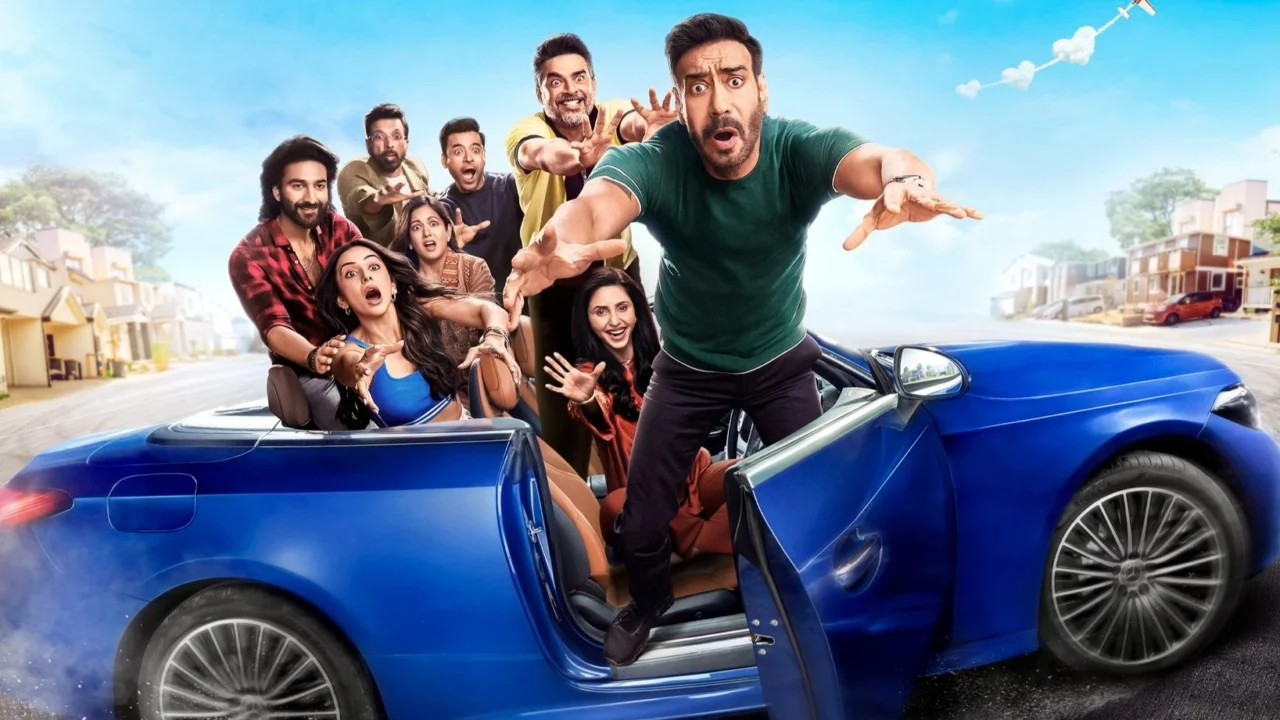
Jaaved Jaaferi provides comic relief without becoming cartoonish. His character offers perspective and levity exactly when needed. Meezaan Jafri makes the most of limited screen time, creating a believable rival who isn’t simply a villain. Gautami Kapoor balances her husband’s intensity with practical wisdom, while Suhasini Mulay leaves an impression despite appearing briefly.
The chemistry among the cast feels authentic. Nobody seems to be acting in isolation. Scenes flow naturally because everyone listens and reacts genuinely. This creates an atmosphere where even smaller moments land with impact.
What Works Best
The humor arises from situations rather than forced setups. When characters clash over generational differences or cultural expectations, laughter comes naturally. The dialogue sparkles with wit, particularly references that connect with contemporary audiences. These aren’t cheap jokes but observations rooted in real family dynamics.
I appreciated the film’s handling of sensitive themes. Rather than preaching about acceptance, it shows characters struggling with real concerns. Parents worry about their daughter’s future. The younger man questions whether love alone sustains relationships. These conflicts feel genuine rather than manufactured for drama.
Director Sharma maintains brisk pacing through most of the runtime. Even at nearly two and a half hours, scenes don’t linger unnecessarily. The first half especially moves with purpose, establishing characters and conflicts efficiently. The climax brings threads together satisfyingly, offering resolution that feels earned.
Room for Improvement
Volume becomes an issue during arguments. Characters raise their voices to levels that feel uncomfortable rather than passionate. Dialing back intensity in these moments would have preserved emotional impact without assaulting eardrums.
The second half loses some momentum gained earlier. Certain dramatic beats extend longer than necessary. Tighter editing could have maintained energy without sacrificing story. Some subplots dilute focus from the central father-daughter-boyfriend triangle that provides the strongest material.
Songs interrupt flow more than enhance it. Except for one track that arrives at an emotional peak, musical numbers feel obligatory rather than organic. The film might have benefited from fewer songs or better integration into the narrative.
Critical Response
Reviews split between praise and reservation. Some critics awarded four stars, highlighting strong performances and entertaining execution. Others gave mid-range ratings, noting the sequel doesn’t quite match the original’s freshness. Common praise focused on Madhavan’s work and situational comedy. Criticisms centered on pacing issues and tonal shifts.
Audience reactions leaned positive overall. Social media buzzed with appreciation for the humor and chemistry between leads. Many singled out Madhavan as the standout performer. However, some felt the second half dragged and became predictable. The general consensus positioned it as solid family entertainment despite flaws.
My Verdict
This sequel succeeds at being exactly what it promises, a lighthearted exploration of love challenging family expectations. While it doesn’t surpass its predecessor’s impact, it carves sufficient identity through strong performances and genuine emotion. Madhavan elevates material that could have played generically.
The film offers refuge from darker, heavier cinema dominating recent releases. It speaks to universal experiences of seeking approval and bridging generational gaps. Parents will relate to Rakesh’s concerns. Young adults will identify with Ayesha’s frustration. Anyone who has navigated family politics around relationships will find something familiar.
Despite pacing wobbles and volume issues, the core remains solid. The humor lands more often than it misses. The emotions register without manipulation. The message about acceptance never overwhelms the entertainment. For families seeking quality time at theaters, this delivers sufficient value.
Rating: 3.5 out of 5 stars
Ankit Jaiswal is the Chief Author, covering Indian cinema and OTT releases with honest, no-filler criticism. An SEO strategist by background, he brings a research-driven approach to film writing, cutting through hype to tell you exactly what's worth your time.
